ServicesRoof Repair
Roof Repair in Bethany, OK
Water spots on a ceiling or a few shingles in the grass usually point to a fixable problem, not a full new roof. We track the leak back to its true entry point, repair it properly, and keep everyone inside your home safe while our crew is overhead.
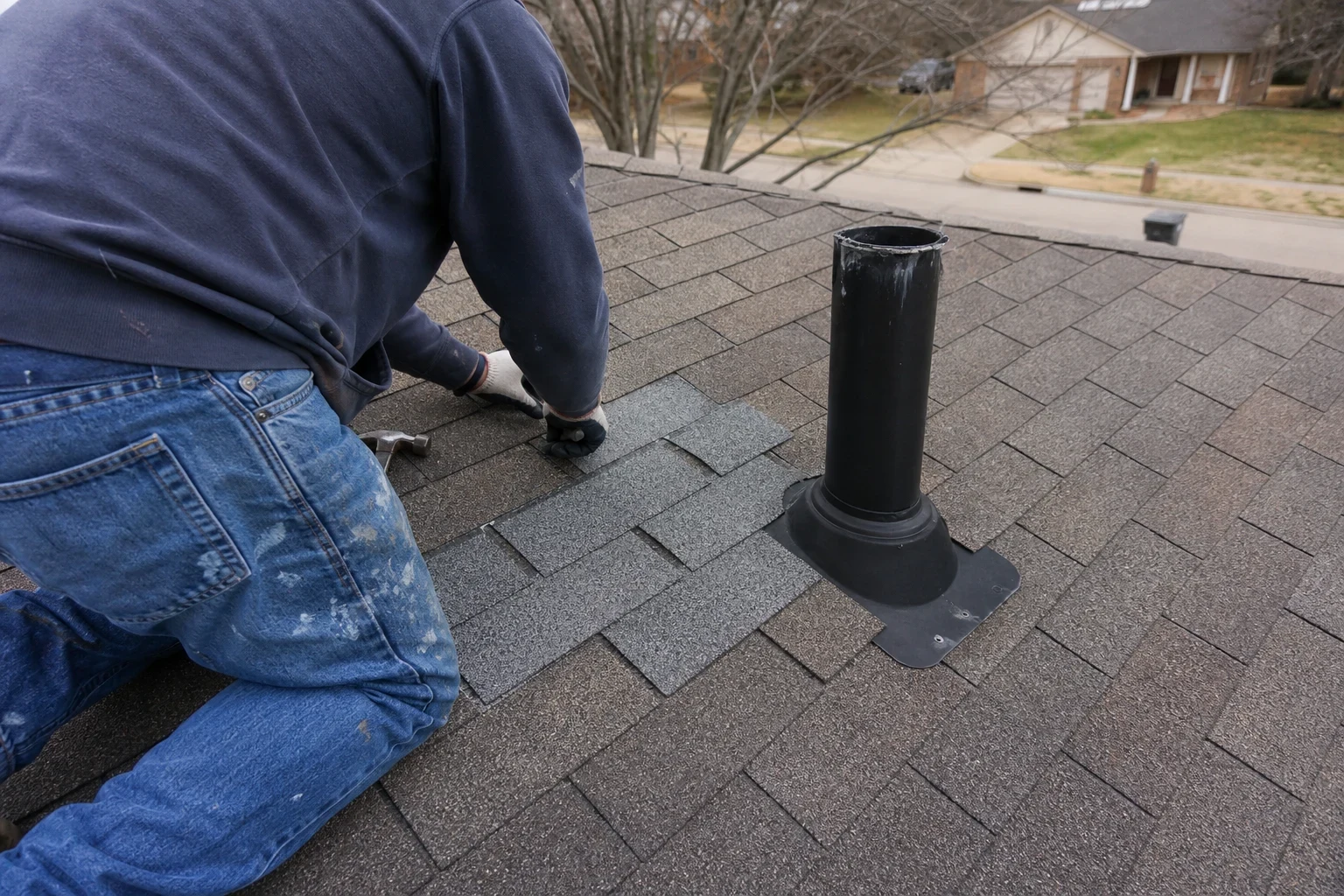
Fixing the cause, not just the stain
A repair makes sense when most of the roof still has good years left and the damage is limited to one spot. That might be a handful of shingles the wind tore off, a split vent boot, flashing pulling loose at the chimney or a section of decking that has gone soft. Water tends to travel along rafters and sheathing before it drips, so the ceiling stain can sit well away from the real opening. We follow it to the source before any work begins.
Every job starts with safety, both for our crew and for your family. If water is close to a light fixture or a ceiling has started to sag, we'll tell you which circuit to shut off and which rooms to avoid, before a ladder ever touches your home.
When a roof is close to worn out, we'll tell you honestly and show how roof replacement compares. In most cases, though, a careful repair is all your roof needs.
What a roof repair includes
Tracing the leak inside and out
Our first stop is the attic, where we check for wet insulation, stained sheathing and spots where daylight shows through. We match those clues to the shingles overhead, so we fix the real opening and leave sound material alone.
Replacing and resealing shingles
Shingles that are cracked, creased or gone get replaced with the nearest match available, fastened to the manufacturer's nailing pattern. Tabs that have lifted but still sit flat are sealed back in place.
Flashing and vent boots
Leaks most often start at roof penetrations like chimneys, sidewalls, skylights and plumbing vents. We reseat or swap out tired metal flashing and replace rubber boots that have dried out and split.
Rotted decking
Sheathing that water has softened can't grip nails or carry a load. We cut out the weak section and install solid new boards before the shingles go back on, since covering rot only buries the problem.
Before and after photos
We take pictures of the damage and of the finished repair, so you get a clear look at your roof while staying safely on the ground.
Nail sweep and cleanup
We haul off the torn-off shingles and run a magnetic sweeper across the driveway, yard and flower beds, picking up stray nails before they end up in a tire or a child's foot.
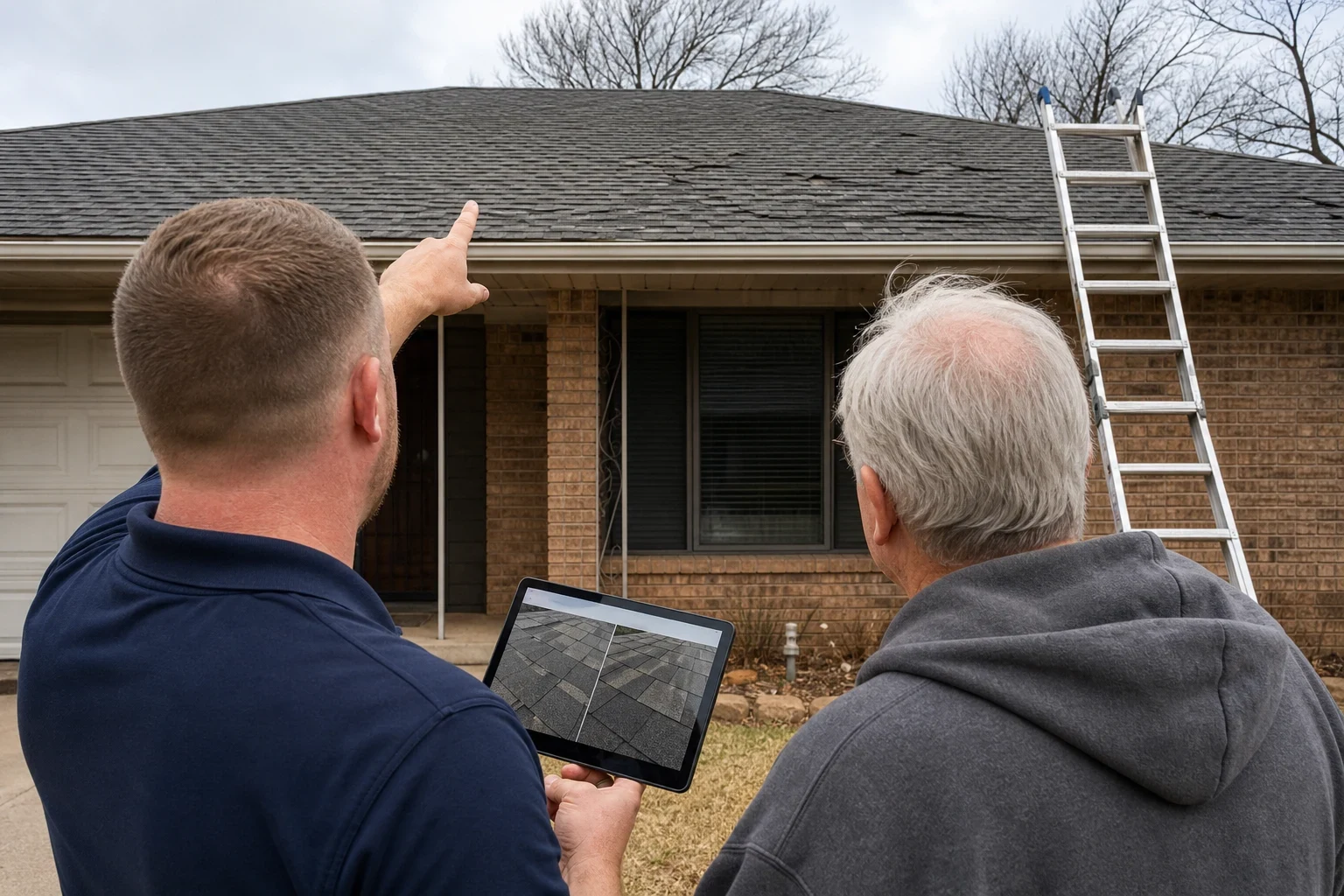
Warning signs your roof needs attention
- Ceiling or wall spots
- Yellowish blotches or paint that bubbles after a heavy storm tell you water is slipping past the shingles. If the area feels spongy or droops, keep people out of that room and clear of any fixture below it.
- Shingles on the ground
- Strong spring winds in Oklahoma can rip shingles off and loosen the seal on neighboring ones. Even one gap exposes the underlayment or decking to the next rain.
- Heavy granules in the gutters
- New shingles drop a little grit. On an older roof, a thick buildup means the protective surface is wearing away and the sun is doing damage faster.
- Musty smell or dampness in the attic
- Soggy insulation, rusted nail points or dark patches under the decking suggest a slow leak or weak ventilation.
- Cracked boots or lifting flashing
- Rubber around a vent pipe that has split, or metal separating from the chimney, is often visible from the yard. Either one is letting water in now or will be soon.
How a repair visit goes
- 1
A conversation by phone
Tell us what you're seeing and where. We'll ask about anything near the leak, like wiring or a bulging ceiling, and set a time to come out.
- 2
Inspection and a straight answer
We look at the attic and the roof, take photos and explain what's wrong. You get a written estimate listing each item before any work starts.
- 3
Setting up safely
Ladders are tied off, our crew wears fall protection on steeper pitches, and we mark off the area below the work. We'll ask that kids, pets and cars stay clear of it while we're on the roof.
- 4
Repair, cleanup and walkthrough
Many repairs are finished in a few hours. Afterward we sweep for nails, haul away the debris and go over the photos of the finished work with you.
What moves the cost of a repair
We price a repair only after we've been on the roof and in the attic. Your written estimate breaks out each item, so the final bill holds no surprises. These are the things that change the number most.
- How long the leak has run
- When we find a problem early, the fix might be one vent boot or a few shingles. Water that has been seeping in for months often reaches the decking, the insulation or the drywall below, and each of those adds to the work.
- Pitch and height of the roof
- A steep slope or a second story calls for extra fall protection and slower, more careful movement, which takes more time.
- Finding a shingle match
- Today's architectural shingles are widely stocked. An older three-tab roof or a color that's no longer made takes more hunting to match well.
- How many spots need attention
- Resetting flashing at a single chimney is a modest job. Sealing several sidewalls plus a couple of skylights is a bigger one.
Questions about roof repair
- Will a repair do, or do I need a new roof?
- That depends on how old the roof is and how far the damage spreads. When the problem is limited to a few areas and the shingles still flex without cracking, repair makes sense. When every slope is worn and brittle, we'll review the photos with you and explain why roof replacement could cost less in the long run. You make the final call.
- Will the new shingles match my existing roof?
- We look for the same style of shingle in the closest available color. Sun fades a roof over the years, so fresh shingles can look slightly different at first. Within a season or two, most repairs blend in.
- Do I have to be home during the repair?
- Not for the repair, since that work is all on the roof. For the inspection, it helps to have someone open the attic so we can follow the water from inside. We'll tell you what access we need when you call.
- Does insurance pay for a roof leak?
- Many policies cover sudden hail or wind damage but not a roof that has worn out with age. We can photograph and write up what we find and explain how claims usually go, but your adjuster decides what's covered. If a recent storm caused the leak, our storm damage repair page explains how we handle those jobs.
- How should I handle a leak until you get here?
- Set a pail or trash can under the drip, and move rugs, furniture and electronics out of the way. If the wet area is close to a light or outlet, turn off that circuit at the breaker. Keep family and pets out of any room with a sagging ceiling, and please stay off a wet roof.
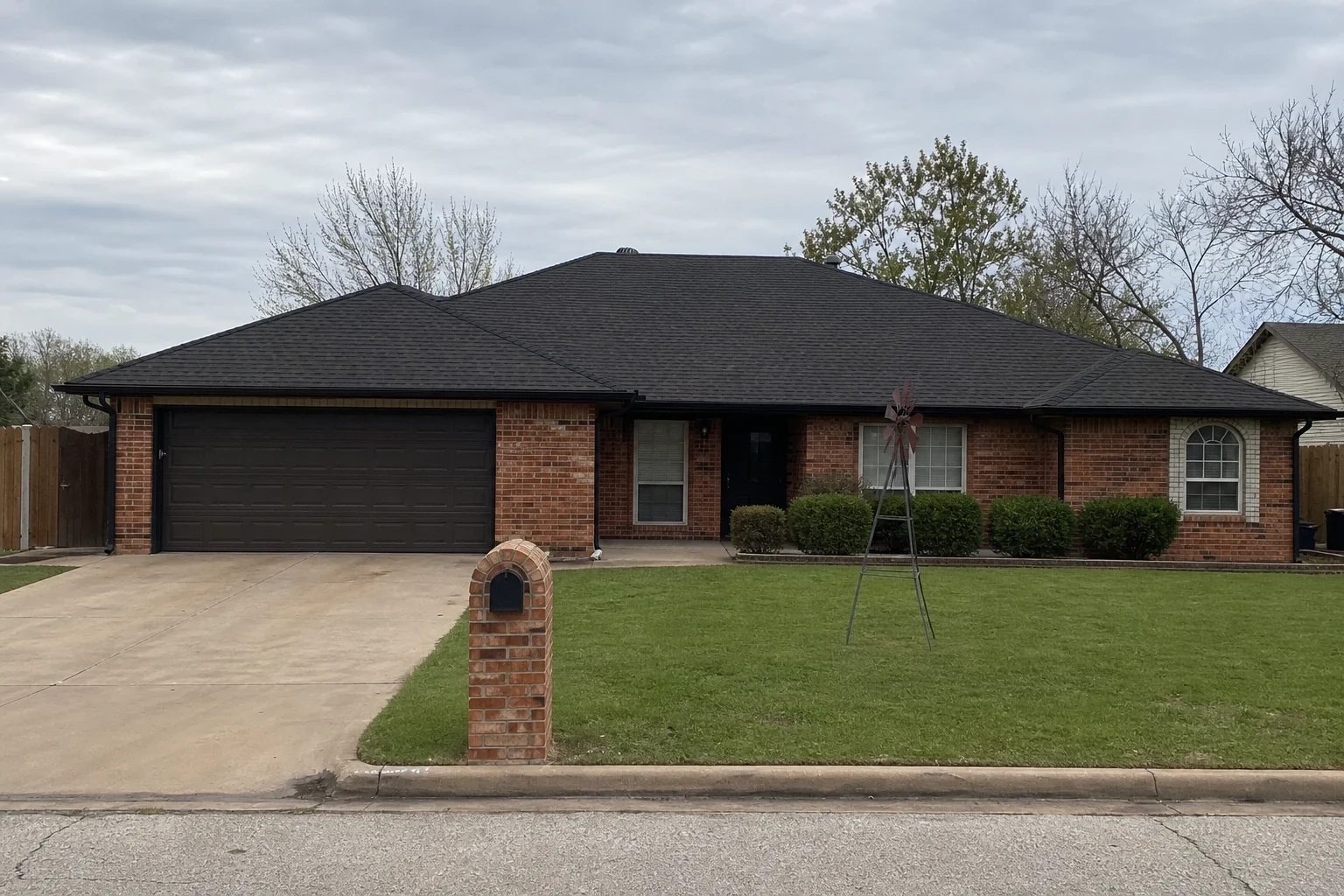
Let's track down where the water gets in
Describe what you've noticed and we'll schedule a visit, look at it from both the attic and the roof, and tell you in plain words what it needs.