ServicesCommercial Roof Repair
Commercial Roof Repair in Bethany
A leak over a sales floor, office or warehouse can't wait for the next budget cycle. We find where the water is getting in, repair the membrane, seams or flashing that failed, and set up our work so the people inside your building stay safe while we're up top.
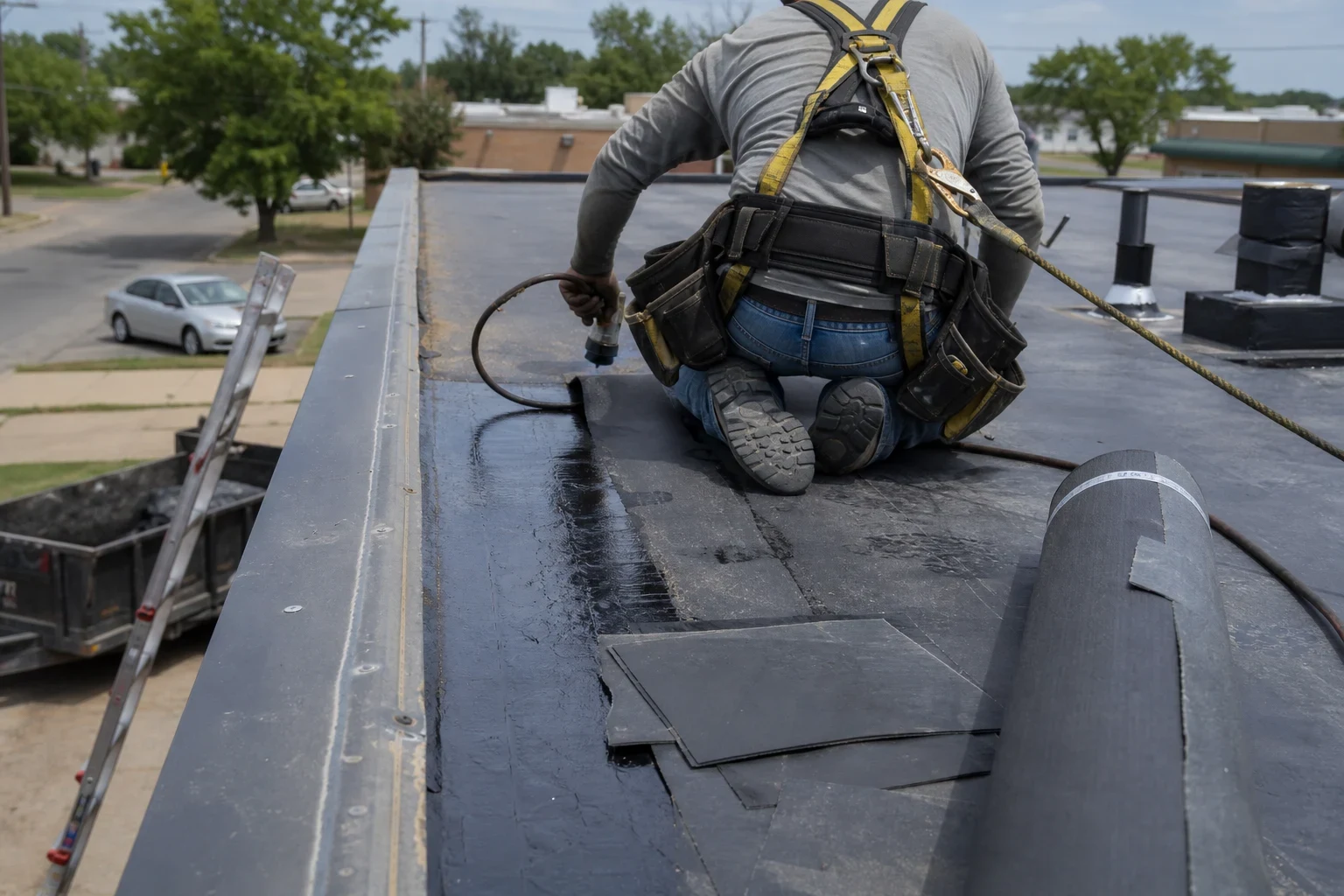
Repairs That Keep Your Building Dry and Your Doors Open
Nearly every business building around Bethany has a flat or low-slope roof. It might be a single-ply membrane like TPO or EPDM, a modified bitumen or built-up gravel system, or metal panels. These roofs rarely fail all at once. Trouble starts at a few weak points, such as a seam pulling apart, flashing lifting off a parapet wall or a pipe boot cracking in the sun, and fixing those points well often adds years of service.
We'll give you a straight answer on whether repair is the right move. If the membrane is worn out everywhere or the insulation below is soaked, we'll show you why and talk through commercial roof replacement. If a patch will solve it, we patch it and leave the rest alone.
Safety drives how we plan every job. A roof has open edges, skylights and running equipment, and your building has staff and customers moving around underneath. We account for both before anyone climbs a ladder.
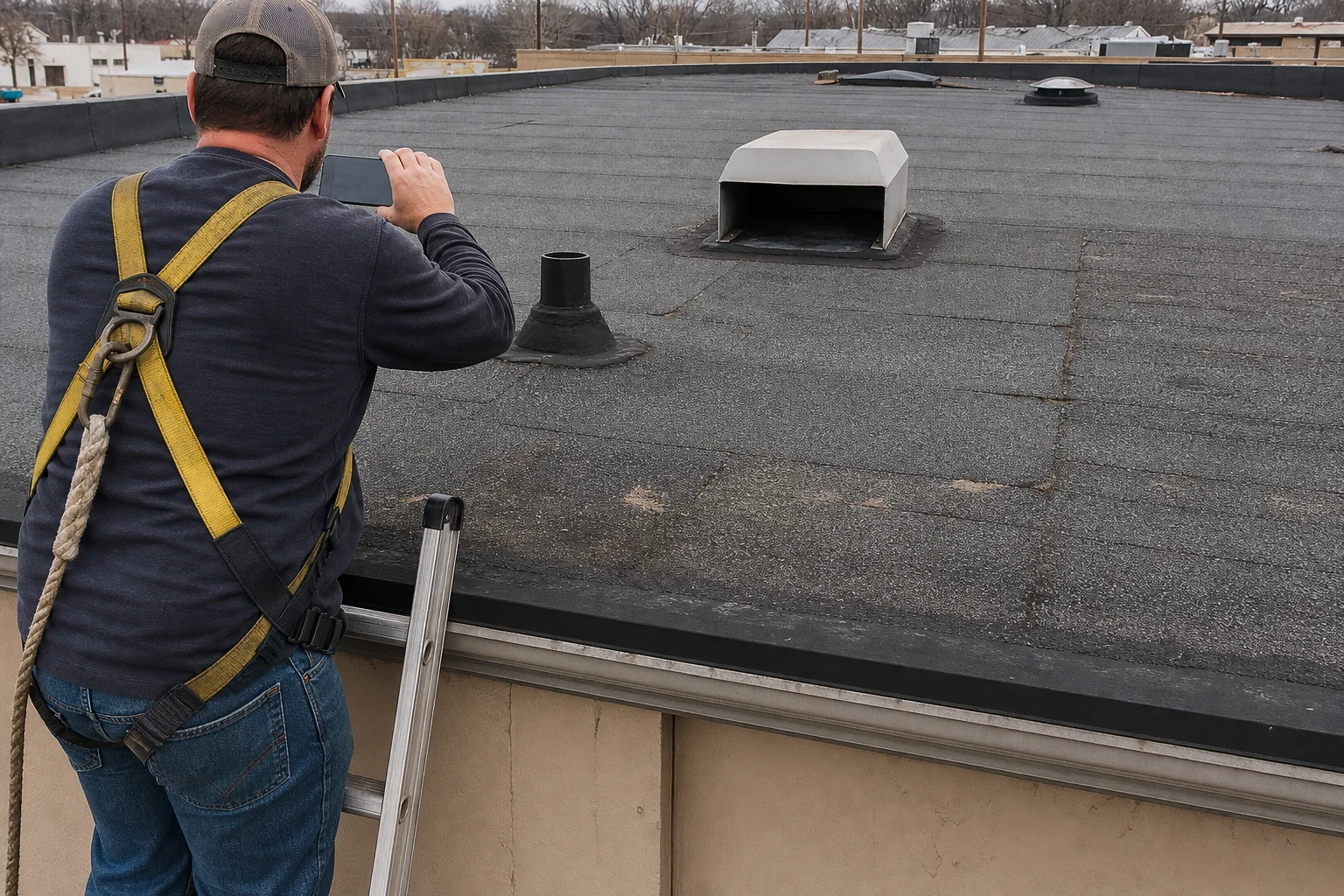
What Our Commercial Roof Repair Covers
- 01
Leak tracing
On a low-slope roof, water often slips under the membrane and runs some distance before it shows up as a drip inside. We begin at the stain on your ceiling and follow it back across the roof until we find where the water actually enters, not just the nearest seam.
- 02
Seam and membrane repair
We clean and prep the surface, then patch split seams, punctures and blisters with materials that match your existing system. TPO gets a heat-welded patch, and EPDM gets the correct adhesive and cover tape.
- 03
Flashing and penetrations
Most commercial leaks start where something breaks through the roof or meets a wall: parapets, HVAC curbs, vent pipes and skylights. We reseal or replace failed flashing, pitch pans and pipe boots.
- 04
Drains and ponding areas
Blocked drains and scuppers leave standing water that wears down a membrane and adds weight to the deck. We clear them, check the strainers and show you any low spots that keep collecting water.
- 05
Photo record
You get photos of the problem and the finished repair. They're handy for your records, your landlord or tenants, and any conversation with your insurer.
Questions about Commercial Roof Repair?
Call(405) 644-4260Signs Your Commercial Roof Needs Repair
Ceiling tiles that stain or droop
A tile with a brown ring or a sag in the middle tells you water has been reaching it for some time. Soaked tiles can drop without warning, so keep people and inventory clear until the leak is repaired.
Water standing two days after rain
Puddles that hang around point to clogged drains or a low spot in the decking. They wear out the membrane faster and put extra weight on the structure.
Bubbles, cracks or open seams
Blisters on modified bitumen, alligator cracking on built-up roofs and seam edges peeling up on single-ply membranes all give the next storm a way in.
Damage after hail or high wind
Oklahoma spring storms can bruise a membrane and loosen edge metal without leaving an obvious hole. A check after a big storm catches small damage before it becomes a leak inside.
Rising energy bills or musty smells
Wet insulation stops doing its job and can grow mold. If one part of the building smells damp or runs hotter in summer, the roof above may be holding water.
How a Repair Visit Works
- 1
Phone conversation
You tell us where the water is showing up, what the roof is made of if you know, and how we reach it. We set a visit time that suits your business hours.
- 2
Safety setup first
We secure ladders, mark warning lines near open edges, and cover or flag skylights. If our work is above an entrance or walkway, we block off that area below so no one walks under it.
- 3
Inspection and written estimate
We trace the leak, check the surrounding membrane and drains, and give you a written estimate with photos. You decide before any repair work starts.
- 4
The repair and cleanup
We make the repair, test drains and seams where we can, and haul off old material and fasteners. Nothing gets left on the roof to blow into a drain or off the edge.
What Changes the Price of a Commercial Roof Repair
No two commercial roofs are built or aged the same way, so we only name a price once we've seen the problem in person. Your estimate puts each piece of the work on a separate line, so you can tell where every dollar goes. These are the things that usually change the total the most.
- The type of roof and its materials
- Heat-welding a TPO patch, bonding an EPDM repair and fixing a built-up roof all use different materials and steps. Older or discontinued membranes often need more cleaning and primer before a new patch will hold.
- Soaked insulation below
- When water has reached the insulation board, we remove and replace that section before sealing the membrane. Closing up over wet board just traps moisture where it causes more damage.
- Getting up there safely
- A single-story building with a roof hatch is quicker to reach than a taller one that needs a lift or a larger fall protection setup.
- Equipment on the roof
- HVAC units, exhaust fans and conduit slow down the work and call for extra care. Sometimes that also means coordinating with your mechanical contractor.
- When the work happens
- Working after hours to keep customers away from the area can change the price. We'll go over those options with you as we plan the visit.
Commercial Roof Repair Questions
Can my business stay open while you repair the roof?
Usually, yes. Most repairs are confined to one section, and we put up barriers under any spot where a tool or scrap could drop. If the work is close to a main entrance, we'll suggest a time when fewer people are coming and going.
How do I know if I need a repair or a full replacement?
We check how much of the membrane is still in good shape, whether the insulation is dry and how old the system is. When damage is limited to a few spots, a repair is usually the sensible choice. When problems show up across the whole roof, we'll explain why commercial roof replacement may cost you less over time.
Do you work on all types of flat roofs?
We repair single-ply membranes like TPO and EPDM, modified bitumen, built-up roofs and metal panel roofs. If you're not sure what's on your building, we'll identify it on the visit so the repair materials match.
Will you help with an insurance claim after hail?
We photograph the storm damage and write up what we found in plain terms, so you have something solid to hand your insurer. We're also glad to walk the roof with the adjuster. The coverage decision is theirs, and our storm damage repair page explains more about what to expect.
What do you need from us before the visit?
Tell us how we get onto the roof, whether there's a locked hatch or a fixed ladder, and where the leaks show up inside. If you can, move stock or equipment away from the drip area so it stays dry and out of harm's way.
Get Your Leak Looked At Before It Spreads
A small seam failure today can mean ruined insulation and ceiling tiles next season. Tell us what you're seeing, and we'll plan a safe visit around your business hours.