ServicesCommercial Roof Replacement
Commercial Roof Replacement in Bethany
When a flat or low-slope roof has worn past patching, we replace it with a plan that keeps your people safe and your business running. You get a clear scope, a marked work zone and a new roof built to code from the deck up.
A new roof without putting anyone below at risk
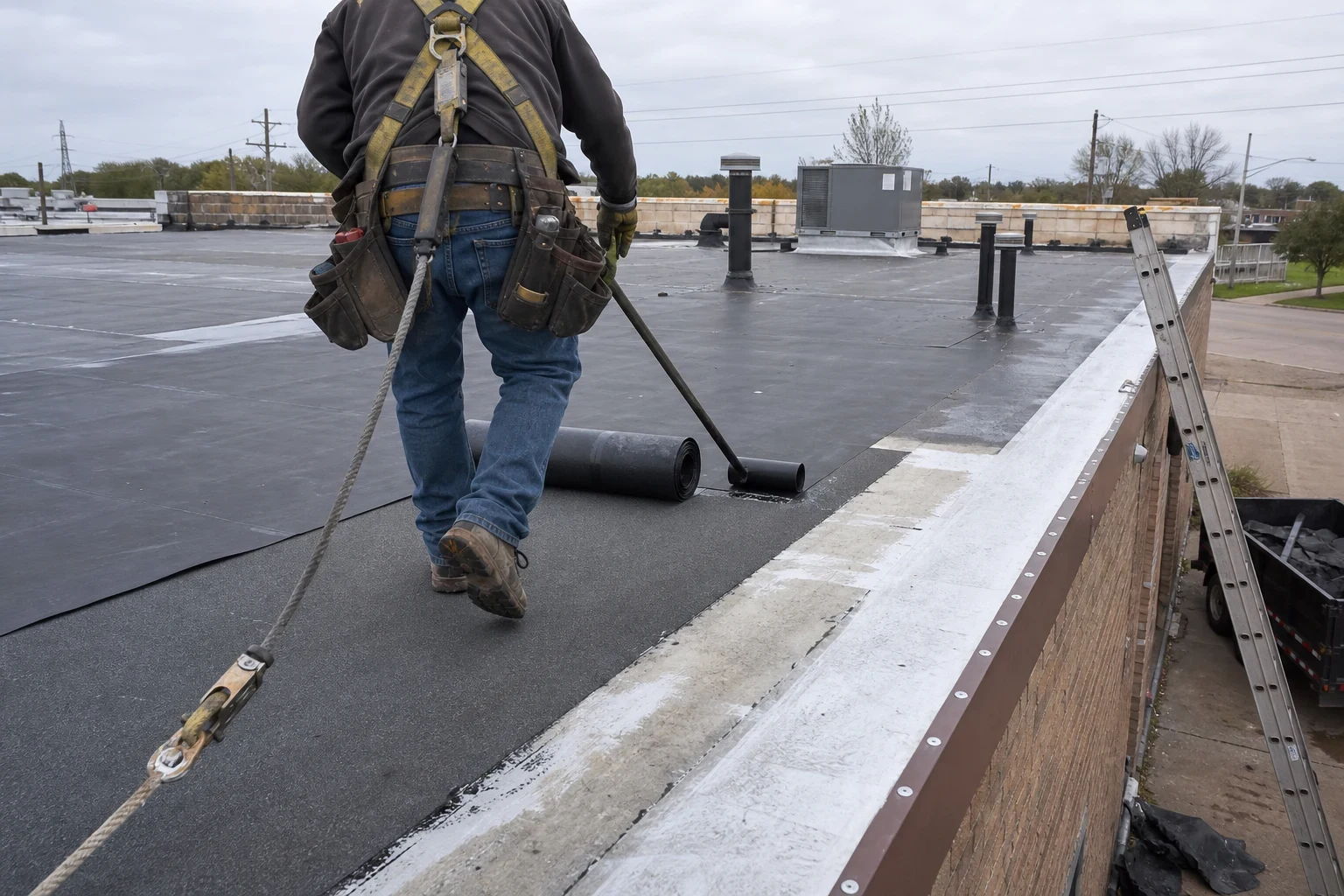
Replacing a commercial roof is a bigger job than most owners expect. Old membrane comes off in heavy rolls, insulation boards get hauled across the roof, and equipment moves near open edges for days at a time. Done carelessly, that puts employees, customers and passersby in harm's way. We start every job by deciding where the crew works, where debris comes down and where people can safely walk.
We work on TPO, EPDM, modified bitumen and metal roofs on offices, retail spaces, churches, warehouses and small industrial buildings. Some roofs need a full tear-off down to the deck. Others can take a recover over the existing system if the insulation underneath is dry and the code allows another layer. We tell you which one fits your building and why, with photos of what we found.
If the roof still has life in it, we will say so. A targeted fix through our commercial roof repair service may be the better spend for now.
What the replacement covers
- Core samples and deck review
- Small test cuts show us how many layers are on the roof and whether the insulation holds water. After tear-off we look over the deck for rust, rot or soft areas and replace damaged sections before new material goes on.
- Fall protection at every edge
- Before any old roofing comes off, we set warning lines, guardrails or personal fall arrest. Skylights and hatches are covered or guarded so nobody can step through.
- Safe zone on the ground
- The area below the debris chute and dumpster is coned off, and loading stays clear of your entrances. Staff and customers are told which doors to use each day.
- Insulation, membrane and flashing
- New insulation goes down to meet current energy code, followed by the membrane and flashing at walls, curbs, drains and rooftop units. Most commercial leaks begin at those details, so that is where we slow down.
- Fixing standing water
- Water that sits for days after a rain wears a roof out early. Where we see ponding, we add tapered insulation or crickets to steer it toward drains and scuppers.
- Permit, cleanup and walkthrough
- We handle the permit, run magnets across the lot to catch stray fasteners, and go up on the finished roof with you so you can see the work for yourself.
When a commercial roof is due for replacement
Leaks showing up in several places
A single leak can usually be repaired. When stains appear on ceiling tiles all over the building, the water has often spread through the insulation.
Areas that feel soft underfoot
A roof that sinks when you step on it likely has soaked insulation or a deck that is losing strength. That puts anyone who goes up there at risk, your HVAC technician included.
Seams coming apart
When single-ply seams shrink, split or lift, water can travel under the whole roof. Having to fix seams again and again tells you the membrane is close to worn out.
Blisters and cracks in the surface
On built-up and modified bitumen roofs, bubbles, alligator cracking and bare felts mean the top layer no longer protects the layers below. Oklahoma's summer heat makes that happen faster.
Hail damage spread across the roof
A cracked membrane or crushed insulation from hail is often impossible to spot from the parking lot. Our storm damage repair page explains what to look at after a major storm.
What drives the cost of a commercial reroof
We build your quote from the measurements and conditions on your actual roof, not a standard price list. Every part of the work gets its own line, so you know where each dollar goes. If tear-off turns up something that was hidden, we stop, send you photos and settle the next step together before doing any extra work.
How big the roof is and what's on it
Square footage drives most of the price. Vents, curbs and rooftop units add time as well, since each one has to be flashed with care.
Full removal or a recover
Stripping off multiple old layers means more labor, hauling and disposal than installing over the current roof. A recover only works when the insulation is dry and code permits another layer.
What's under the membrane
Soaked insulation and deck panels that have rusted or rotted must be removed and replaced. The core samples we take on the first visit show early on how much of that work to expect.
Roof system and drainage choices
TPO, EPDM, modified bitumen and metal each cost a different amount to buy and install, so your choice changes the total. Tapered insulation to stop ponding adds a little to the price but helps the new roof last longer.
Access and safety setup
The height of the building, parapet walls, busy doors and tight space for a dumpster all change how much safety gear and setup time the work needs.
How the job runs
- 1
Roof survey and safety walk
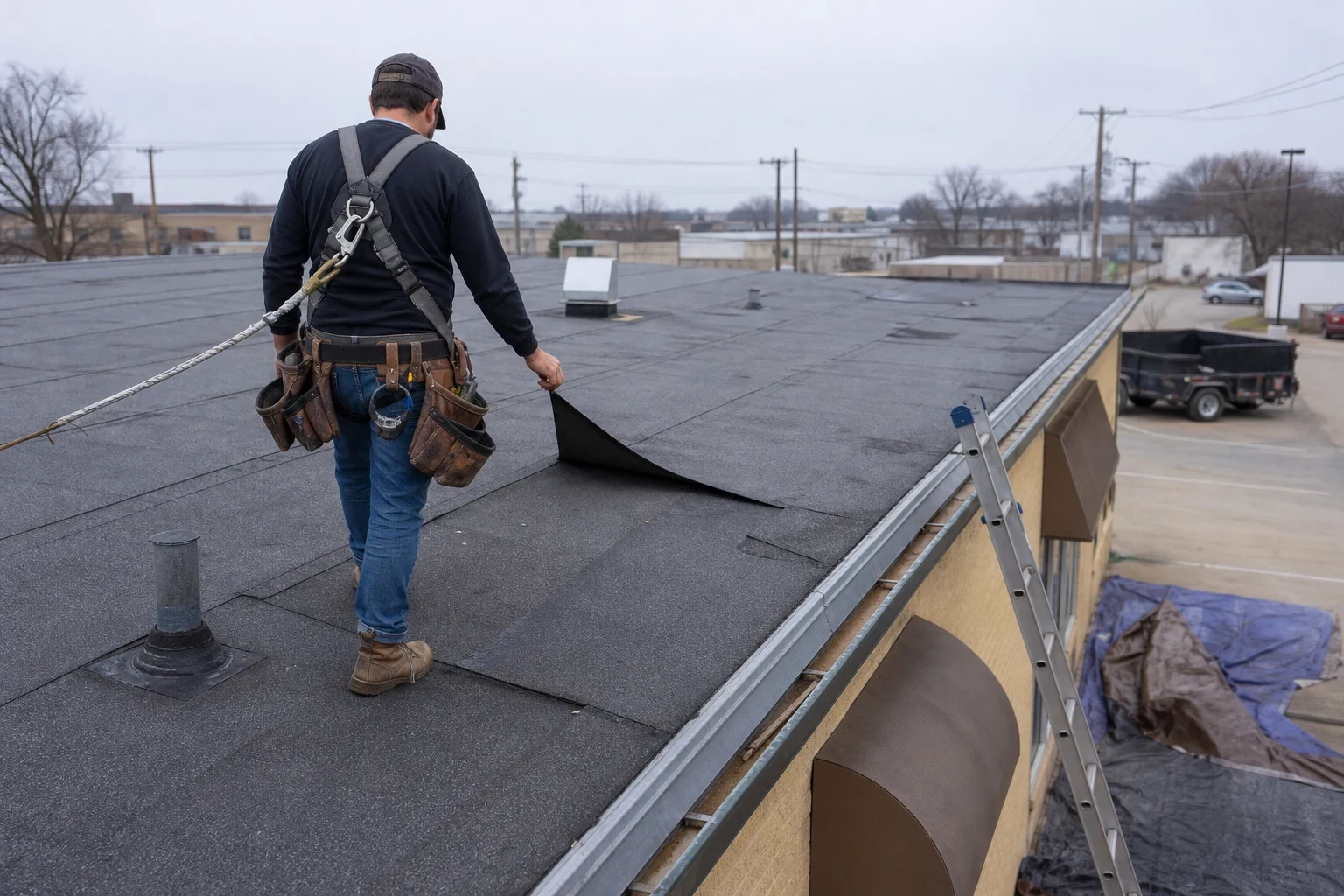
We climb up, take core samples and photos, and mark hazards such as skylights, short parapets and weak deck spots. We also watch how people move in and out of the building below.
- 2
Written scope and site plan
You receive a line-item scope covering the roof system, insulation, flashing and drainage work. It also shows where the dumpster, chute and work zone go, and which doors your staff and customers will use.
- 3
Section-by-section tear-off
Each day the crew strips only the area it can make watertight again before quitting time. That way your interior stays protected if a storm rolls in overnight.
- 4
Install and inspect
Insulation, membrane and flashings are installed, and seams are checked as the work moves along. Once everything is ready, we schedule the permit inspection.
- 5
Cleanup and handover
Debris is hauled away, the parking lot is swept for nails and screws, and we tour the roof with you and pass along photos of the completed job.
Commercial roof replacement questions
Do I have to close my business while the roof is replaced?
Usually not. We plan the work zone around your entrances and parking, and the crew opens only as much roof each day as it can seal again before leaving. Noise tends to be the main inconvenience, so we can schedule the loudest tasks for slower hours if that helps.
Does the old roof have to come off, or can the new one go on top?
It depends on how many layers the building already has and whether the insulation underneath is dry. Core samples answer both questions. If a recover is safe and permitted by code, we will tell you, because it can lower labor and disposal costs.
How long does a commercial roof replacement take?
A smaller building may need several working days, while larger roofs take longer. Rain and deck repairs can change the schedule. Your written scope lists an expected timeline, and we let you know right away if weather costs us a day.
What happens to my rooftop HVAC units?
We work around them and flash each curb properly into the new roof. If a unit needs to be raised or disconnected, we coordinate with your HVAC contractor so it is done safely.
Which roof system is best for my building?
TPO is a common pick for low-slope roofs because its light surface reflects heat, EPDM holds up well and is simple to patch, and modified bitumen handles foot traffic. We base our recommendation on your roof's slope, how the building is used and your budget, then explain the tradeoffs so you can choose.
Ready to plan your new roof
Tell us about your building, the leaks you have seen and how people use the space. We will set up a time to look at the roof and talk through a safe plan for the work.