Which Gutter Size Is Better for My Bethany Home, 6-Inch or 7-Inch?
Gutter width sounds like a small detail until water sheets over the edge onto your front steps during a spring storm.
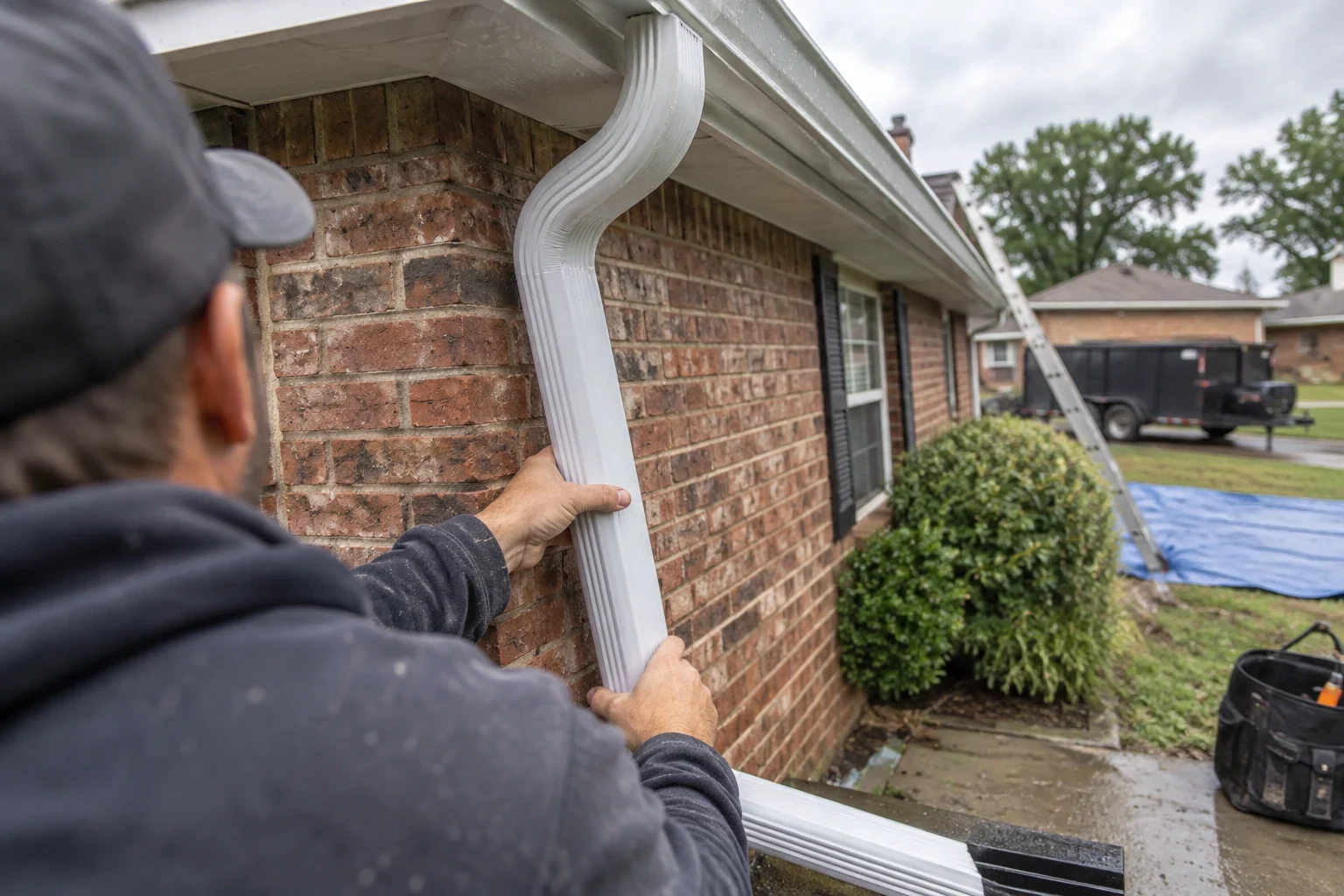
Which size gutters are better for my home, 6-inch or 7-inch?
For most Bethany homes, 6-inch seamless gutters are the better choice. They carry heavy Oklahoma downpours well on typical one- and two-story roofs without extra weight on the fascia. A 7-inch gutter earns its place on large, steep roof sections or where valleys pour into one short run. Downspout size matters just as much as width.
What does gutter width actually change?
Width sets how much water the gutter can hold and move before it spills over the front lip. A wider trough also gives fast water from a steep roof more room to land, so less of it shoots past the gutter entirely.
Going wider is not free of trade-offs. A bigger gutter holds more water, debris and, in winter, more ice, so it puts more weight on the hangers and the board they screw into. That is why the right size is the one matched to your roof, not simply the largest one available.
When is 6-inch the right call?
Many older homes still have 5-inch gutters, and they often overflow when a strong thunderstorm parks over the area for twenty minutes. Moving up to 6-inch gives noticeably more capacity while still looking in proportion on a ranch or a standard two-story house.
For most of the homes we see around Bethany, 6-inch with properly sized downspouts solves the overflow problem. It fits standard hangers, stays light enough for typical fascia boards, and pairs well with gutter guards if you have trees nearby.
- Single-story and most two-story homes
- Roof pitches from low to moderately steep
- Runs where water is spread fairly evenly along the edge
- Homes upgrading from 5-inch gutters that overflow in hard rain
When does a 7-inch gutter make sense?
A 7-inch gutter is a specialty size. We suggest it when a single gutter run is catching water from a very large or very steep roof plane, or when two roof valleys meet and dump a concentrated stream into one spot.
It can also help on homes with a tall second story feeding a lower roof, where water from above lands on the lower section and doubles the load at its edge. In those cases the extra width keeps water in the trough instead of over the side.
Because it is heavier and less common, a 7-inch system needs sturdier hangers spaced closer together and a fascia in good condition. Sometimes the smarter fix is a 6-inch gutter with an added downspout rather than a wider trough.
- Large, steep roof planes draining to one edge
- Valleys that concentrate water into a short run
- Upper roofs that empty onto lower roofs
- Long runs where adding downspouts is not practical
Why do downspouts and hangers matter as much as width?
A gutter can only empty as fast as its downspouts allow. A wide gutter with one small 2x3 downspout at the far end will still back up, while a 6-inch gutter with 3x4 downspouts placed near the heavy flow often outperforms it.
This is also a safety question for your home. Overflow tends to land right where people walk, at entry doors, garage aprons and patio steps. In an Oklahoma ice storm that water freezes into a slick patch, and over time it soaks the soil along the foundation. Solid hangers matter too, since a gutter full of water and ice that pulls loose can drop off the roof edge.
When we size a system, we look at where the downspouts will empty and keep them directed away from walkways and the foundation, with extensions or splash blocks where needed.
How do we decide the right size for your home?
We start by looking at the roof itself: how big each section is, how steep it is, and where valleys and upper roofs send their water. We also check the condition of the fascia boards, because new gutters should never be hung on soft or rotted wood.
Our crew works from properly set ladders and stays off wet or icy roofs, and we keep tools and old gutter pieces cleared away from doors and driveways while we work. If your roof is due for replacement, that is a good time to size new gutters, since the drip edge and fascia are already exposed and can be fixed together. Our roof replacement and gutters work can be planned as one job so you are not living through two projects.
More questions about gutter sizes
Something not covered here? (405) 644-4260
Can I use 6-inch on most of the house and 7-inch in one spot?
Yes, mixing sizes is possible where one run carries far more water than the rest. We make sure the transitions are sealed and the look stays consistent from the street.
Will a 7-inch gutter look too big on my house?
On a modest single-story home it can look heavy. On larger or taller homes it usually blends in, and we can talk through how it will look before anything is ordered.
Do wider gutters still need gutter guards?
Width does not stop leaves and shingle grit from building up. If you have trees over the roof, guards still help keep the trough and downspouts flowing.
Can my existing 5-inch gutters be widened?
No, the trough shape is formed at the factory or on the gutter machine, so going bigger means hanging new runs. It is a good moment to resize the downspouts and replace tired hangers at the same time.
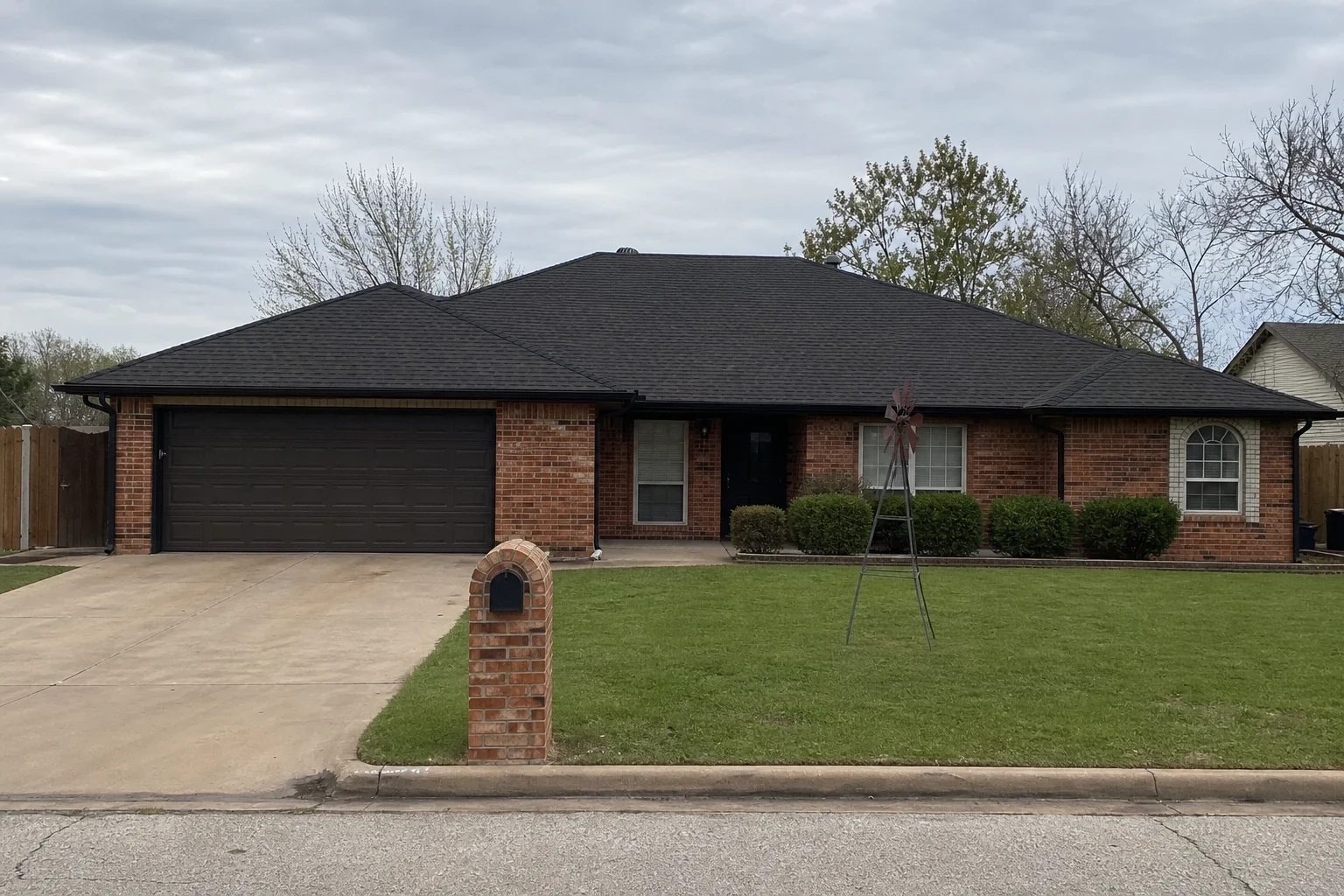
Not sure which size fits your roof?
Give us a call and we will talk through your roof, where it overflows today, and whether 6-inch or 7-inch gutters with the right downspouts will keep water away from your doors and foundation.